


Today, when a single government agency can’t conduct its business efficiently, let’s remember back 75 years when four federal agencies provided meaningful work and training to millions of young men over the course of nearly a decade.

Seventy-five years ago today, a conservation army was mustered for duty in the forests, fields and parks of this country to begin what would ultimately be more than nine years of continuous work. The conservation army that undertook this peaceful occupation was Franklin Roosevelt’s Civilian Conservation Corps- the CCC. Among the results here in Arizona: trail systems in Grand Canyon, visitor amenities in South Mountain and Papago Parks, improvements at Colossal Cave and forestry improvements in all of our national forests. Nationally, the work of the CCC stretches from Acadia in Maine to Yellowstone in Wyoming, from Gettysburg in Pennsylvania to La Purisima in California. In fiscal year 1937 alone the CCC built a total of 2,476 vehicle bridges, 11,559 miles of truck trails and they strung over 10,000 miles of telephone and power lines, largely to the benefit of our National Forests and National Parks. Multiplied over 9 years, the numbers become almost incomprehensible and the fact that we continue to derive benefit from this work three-quarters of a century later is unfathomable in our modern throwaway society.
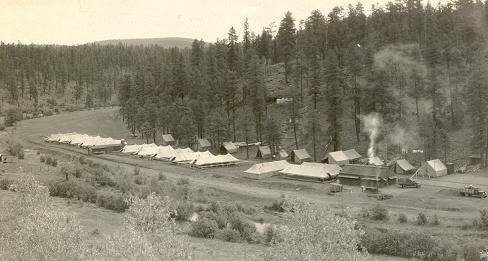
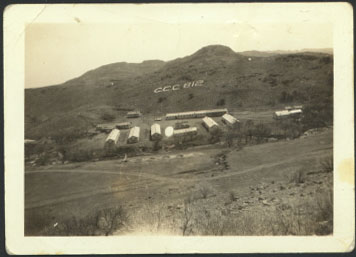
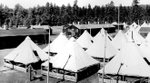
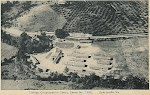
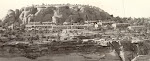
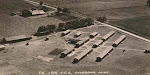
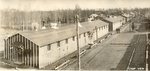
 In a cooperative effort not seen before or since, the Departments of War, Labor, Agriculture, and the Interior, worked together to select suitable enrollees, provide medical checks and inoculations, issue supplies and work clothes and arrange transportation to the many camps scattered throughout the United States and its territories. The CCC was not run by the military. The camps – usually home to about 200 enrollees – were placed under the command of a reserve military officer, but military discipline was prohibited and enrollees were only under the control of the commanding officer during their hours in camp. In fact, many of the reserve officers called up to run the camps were themselves unemployed because of the national economic crisis and thus, they had a good deal more in common with the enrollees than some historians have been inclined to point out. During the workday, enrollees labored and learned under the watchful eye of foremen and supervisors from the technical services such as the Forest Service, National Park Service, Bureau of Reclamation and the Soil Conservation Service.
Ultimately, some 3 million young men passed through the ranks of the CCC between 1933 and 1942. Enrollees were housed, clothed, fed and paid $30 a month, of which as much as $25 was sent home to needy family members; after all, what good was $30 in the pocket of a lad living in a forest camp? The economy needed dollars to circulate and the monthly CCC allotments helped make that happen. Furthermore, the establishment of a CCC camp typically meant an additional $5,000 in monthly expenditures in the local marketplace because the camps bought many supplies locally, which created jobs in communities nationwide.
The work and history of the Civilian Conservation Corps is largely forgotten. Reinvigorated enrollees lay down their shovels to take up the fight against fascism. The “boys” of the CCC became the men of Corregidor, Midway, Anzio and Omaha Beach. Vocational skills gained in the CCC camps were put to use in our factories building tanks and airplanes. Nearly to a man, former CCC enrollees will tell you that the CCC was the best thing that ever happened to them, but as a nation we tend to remember more about the World War they fought between 1942 and 1945, than we do the quieter time from 1933 to 1942 when our nation was home to the Civilian Conservation Corps and its peaceful occupation.
In honor of this special day, here are some interesting CCC and New Deal anniversary links that have appeared on Google and elsewhere recently:
A nice remembrance appeared in this morning's online edition of the Deseret News out of Salt Lake City.
An interesting page from channel 8 in Austin, Texas. Included on the page is a link to a video clip. I don’t think any state beats Texas for its consistent, enthusiastic recognition of the work of the CCC
http://www.news8austin.com/content/your_news/default.asp?ArID=204161
A nifty article that ran in USA Today a few days back. National coverage like this is rare and usually comes out only during a significant milestone event or anniversary, but it’s still nice to see the coverage and some recognizable faces and names among those being interviewed.
http://www.usatoday.com/news/nation/2008-03-18-ccc75th_N.htm
Here’s a blog post from the California State Parks, announcing a special 75th anniversary exhibit to run at the state capitol. Also noted are observances at parks around the state.
http://yubanet.com/regional/75th-Anniversary-of-CCC---Civilian-Conservation-Corps.php
The CCC alumni and preservation group is known as CCC Legacy. CCC Legacy is the result of a merger between the National Association of CCC Alumni and the Camp Roosevelt Legacy Foundation. CCC Legacy has headquarters at both Jefferson Barracks, Missouri and Edinburg, Virginia. On the organization’s web page you’ll find links to events that are planned for the 75th anniversary as well as links to local CCC alumni newsletters and websites.
http://ccclegacy.org/
http://ccclegacy.org/
The original website for the National Association of CCC Alumni is still up as well. There is a very useful list of camps organized by state, as well as a selection of CCC items like caps and T-shirts available for purchase. You can visit that site here:
http://www.cccalumni.org/
http://www.cccalumni.org/
For an example of the ill-informed sort of information that gets posted and published about the Civilian Conservation Corps, check out this blog, if you've got two minutes to waste. (I hope to make a post about this sort of ignorance some time in the future.)


 The walking tour of CCC sites in Grand Canyon Village begins with the Community Building, just northeast of Parking Lot E. The Community Building was funded with Public Works Administration funds and built with CCC and park labor between 1934 and 1935. The building, which replaced a structure that burned down in 1933, has served as a public library, hosted plays and meetings and served as a theatre for showing movies.
 The next stop on the walking tour is a culvert, located near the intersection of Village Loop and Center Road. The Park Service reports that the exact date of construction of this culvert is unknown but it is believed to be a CCC built structure. Close inspection of the culvert – actually two culverts and stone headwalls – shows that the pipes may have been extended in the process of widening Village Loop at some later date. Evidence of the stone ditch lining is still visible downstream of the culvert outlets. The Park Service literature indicates that this culvert has required little maintenance over its life span; a tribute to the beneficial work of the boys in the CCC.

 From the intersection of Village Loop and Navajo Street, the route of the walking tour proceeds across the railroad tracks, past the train station and up the steps leading to the historic El Tovar hotel. At this point the visitor is on the flat crest of ground immediately adjacent to the south rim of the canyon and if they proceed to the east along the rim to a point between Hopi House and Verkamps Curios they will see a bench carved out of a huge log. The CCC constructed log benches in conjunction with their work refurbishing the rock wall along the rim. It is believe that this massive bench was created in 1934 or 1935, though no documentation exists to provide proof. It seems ironic that, while the CCC boys seldom left visible markings to identify their work, countless Grand Canyon visitors have seen fit to carve their names into this historic log bench, seemingly in an effort to make their own short visit somehow more meaningful.
 Proceed from the log bench in a westerly direction (to your left as you face the canyon) less than 100 feet to the rock wall opposite Hopi House. The walking tour notes indicate that in 1934 and 1935 the CCC completely rebuilt the rock wall along the South Rim from Verkamps Curios to Lookout Studio, replacing a poorly constructed and dilapidated dry wall and a section of wooden fence. The CCC standardized the dimension to 27 inches high and 18 inches wide, with guardrails added in some places. It is worth pointing out that in some places the workers would have been in quite a precarious position as they worked on the wall, but to their credit, no major accidents or injuries were reported as a result of CCC work at Grand Canyon’s South Rim. (Indeed, the only CCC fatalities reported at Grand Canyon were the result of off-duty mishaps that involved a fall from the south rim and a drowning in the Colorado River at the bottom of the canyon.)
 Proceeding along the rim to the west you’ll come to a flagpole at what is called North Rim View. From here you’ll see – barely – the North Rim’s Grand Canyon Lodge. Company 818 worked on the North Rim in the summers, building structures, fences, fighting forest fires and building roads. During the winter months the men were moved to the bottom of the canyon to areas like Phantom Ranch. Phantom Ranch’s Bright Angel Campground was built by the CCC, as were a number of trails including Ribbon Falls Trail and the nine-mile Clear Creek Trail. CCC enrollees also constructed the Colorado River Trail from 1933 to 1936 and while it is only two miles long, it is reportedly the most difficult and hazardous trail ever constructed in the canyon.
 Continue walking westerly to a point in front of Kachina Lodge and you will find a plaque that has been affixed to the top of the stone wall. This plaque commemorates the transcanyon telephone line installed by the CCC. Prior to construction of this transcanyon line, communication between the North and South Rims was unreliable. In order to remedy the situation in 1934, a group of CCC enrollees started from each side of the canyon, working their way towards each other, all the while stringing telephone line on metal poles, down steep cliffs and though narrow gullies, often in temperatures exceeding 100 degrees! When the transcanyon telephone line was completed in 1935 it stretched from the North Rim along North Kaibab Trail to Cottonwood Camp and Phantom Ranch, then across the Colorado River to a spur line on the south Kaibab Trail at a point known as “The Tipoff.” The main line continued along Bright Angel Trail connecting Phantom Ranch to Indian Garden, and then to the South Rim developed area via the rest houses along the trail. The line was used so much that another circuit was added in 1938-1939. The Park Service guide reports that the line included 592 metal poles and, because cell phones do not work with in the canyon, parts of the original telephone line are still in use today. If you look carefully down the slope beyond the plaque on the stone wall, you will see two or more of the metal poles for the telephone line.
 Continue walking west past the Thunderbird Lodge, Bright Angel Lodge and Lookout Studio to historic Kolb Studio. In 1936 the CCC built the stairs that lead up the slope toward the mule corral. The stairs were originally of all stone construction without handrails, however the stone treads have been replaced with concrete steps and for safety reasons, a hand rail in now in place. Proceed up these steps and walk to your right, a few hundred feet to the stone and pipe mule corral and the trailhead of Bright Angel Trail.
 The Park Service walking tour points out that the Bright Angel Trail was used by American Indians long before the first pioneers arrived in the 1880s. The trail was transferred to the National Park Service in 1928, some five years before the creation of the CCC. The CCC undertook major reconstruction of the trail, completing the work in 1939. Originally the trail was only two to three feet wide in places. Using pick, shovel, drill and dynamite, the boys of the CCC reconstructed and rerouted the trail to its current width of four to six feet. Additionally, the CCC built rustic stone and timber shelters long the trail.