Showing posts with label Arizona. Show all posts

Wednesday, October 6, 2010

Mysteries and Conundrums, Indeed: CCC Camp Remnants in Your Neighborhood?

So often, the locations of former CCC camps are lost to history or perhaps known only to a few local residents and historians. Sadly, when the last of the locals pass away, they may likely take with them the last bit of knowledge regarding where the CCC camp stood in their neighborhood. In the future, it will fall to local historians to document this information and the better the documentation, the better the preservation.

While doing a Google blog search for posts related to the Civilian Conservation Corps, I came across the blog Mysteries and Conundrums where there was posted an article entitled A Camp in the Wilderness: CCC Camp MP-4. Please read it; it’s as good a bit of CCC sleuthing as you’re likely to find anywhere on the net. The author provides not only an excellent bit of geo-referencing that includes a comparison of aerial photos from the 1930s and today, but also some fascinating background on the camp and its baseball diamond.

There is a similarly situated CCC camp in the Phoenix area (actually the site of two camps) and, unless you’re a CCC historian, a park ranger or perhaps an avid hiker, you’d likely miss the signs that tell you that a community of up to 400 young workers once lived in the area. The original flagpole base – likely constructed by enrollees from Texas – is still in place, but hidden by native vegetation and likely protected from vandalism as a result.

Which brings us to the potential downside of knowing about and revealing the locations of these old CCC camp sites. How much information is too much information? Fortunately, what little remains of Camp MP-4 is likely protected simply because it rests within the Fredricksburg and Spotsylvania County Battlfields Memorial, and likewise, the Phoenix CCC camp is inside a City of Phoenix Park, but what of the hundreds of CCC camps spread throughout the forests and fields of the United States. Fact is, most will continue to decay in silent anonymity, prey to the odd vandal or treasure hunter digging for artifacts, but mostly giving in to the unstoppable march of time and the ravages of mother nature.

All of which, leads me to another interesting topic: the work of the CCC at Civil War battlefield sites. Perhaps a post for next time.

Meantime, some snapshots of CCC camp remnants that I’ve visited….
Two views of what is left of Camp Custer in South Dakota...


A shot of the old dynamite bunker at the CCC camp site in Cumberland Falls near Corbin, Kentucky.....

Two stone pillars are almost all that remain of the two CCC camps that once operated at Phoenix South Mountain Park, but if you look closely when you're there, you might find the old flagpole stand, too!

It's anyone's guess what this concrete structure was used for at the old Lynx Creek CCC camp near Prescott, Arizona.

This is the floor of the old latrine and shower building at the former site of the Walnut Creek CCC camp, also near Prescott, Arizona.There are a number of remains at the site of the Schultz Pass CCC camp outside Flagstaff, Arizona. Look carefully and you'll see porcelain insulators and wires strung in the trees....
...and the concrete floors of a number of buildings including what was probably the mess hall and the officer's quarters.

But perhaps the neatest CCC camp remnant in Arizona is this "monument" built by CCC enrollees at the Indian Gardens camp near Payson, Arizona....

It's easily accessible, without so much as a five step walk off a major road, but it's only there for those who truly want to see it. If you whiz by at 50 miles per hour, you'll miss it.

Wednesday, September 15, 2010

Regimentation. Standardization. Professionalism.

The first rules of sturdy workmanship: work from a good set of plans and have knowledgeable, dependable foremen.

While every CCC enrollee’s story is unique, there is a commonality of experience that runs though the entire program and listening to the stories or reading the personal accounts of former enrollees, one is stuck by common themes that run through the narrative of the Civilian Conservation Corps.

Well, I’ve happened upon a set of photos that may help confirm the universality of the whole CCC experience, while at the same time perhaps speaking to the regimentation that was required to successfully shepherd hundreds of thousands of young men through a national work program, while producing construction improvements of lasting merit.

Consider this image from a collection of photos taken in Northern Arizona during the 1930s. This particular photo is of a wooden pole configuration at or near Grand Canyon National Park. I’ve no idea what the purpose of the twin pole arrangement is; perhaps it was part of a gate, or perhaps it was one in a series of telephone or telegraph poles strung through the juniper. Considered on its own, the photo is not especially remarkable and one wonders why the photographer even bothered with snapping the picture at all. I received the negative from the old National Association of CCC Alumni in response to a request for information about the CCC at Grand Canyon back in the early to mid-1990s. I made a print of the image and returned the negative to NACCCA, not giving this particular photo much thought.

Flash forward a few years to a hike I took with a fellow CCC historian and advocate in the area around Prescott, Arizona. While walking the grounds of the former CCC camp at Walnut Creek, heads down, strolling through knee-and waist high vegetation, we studied the remains of what once was a shower and latrine building and assorted other structures. But one particular camp remnant spoke to me more strongly than the others that day and it only took a second or two for me to realize I’d seen this sort of construction before.


This pole configuration, evidently set for stringing telephone or electrical wire between buildings in the camp, was nearly an exact twin to the pole installation in the picture from Grand Canyon. I snapped a couple of shots of what otherwise would have been a meaningless, nondescript wooden pole, knowing that somehow there was probably a lesson there somewhere.

I started off this piece with the notion that I’d find value in the commonality – the banality, perhaps – of CCC work and the CCC experience, thinking that to be a good thing. I still think the commonality of the CCC experience is a good thing; perhaps it sooths us some 75 years later, but in contemplating these two wooden poles in two separate regions of Arizona, I’m struck by a more valuable message, and that is the importance of good standard plans, a strong work ethic, high standards of workmanship and a cadre of experienced professional leaders (in the form of Park Service and Forest Service foremen). How else can you account for the fact that these two poles – hundreds of miles apart – form nearly a mirror image and that at least one of them is still standing more than 7 decades after it was placed in the ground? That’s a bit of commonality we could use today.

Monday, April 14, 2008

The Two Faces of Camp F-33-A, Mayer, Arizona

IMAGE: Camp F-33-A, Mayer, Arizona Circa 1939

After the dissolution of the CCC in 1942, former CCC camps were used for a number of purposes, in many cases being dismantled and moved to other sites for use by the military. Some camps were used to confine Axis prisoners of war, while others were used to house conscientious objectors who, due to religious beliefs, chose not to enter the military, opting instead to work in camps to perform useful, non-war related work. One of the more unfortunate uses of former CCC camps was as internment centers for the relocation of Japanese-Americans.

Camp F-33-A was established in Mayer, Arizona in the fall of 1933 and CCC companies alternated between the Mayer camp and other camps over time. Work done by CCC enrollees at the Mayer camp included twig blight control, trail construction, telephone line construction, bridge building, rodent control and erosion control.

Camp F-33-A served very briefly as a temporary relocation camp for Japanese-Americans who had been relocated from southern Arizona. Nothing remains of the camp today; the area has been swallowed up by homes and a small business area alongside the road through town. A Circle K convenience store dominates the area where once stood the camp. According to a National Park Service website, the Mayer camp was occupied for a shorter length of time than any relocation camp, with the internees being moved to the Poston Relocation Center less than a month after arriving at the Mayer camp.


During its life as a CCC camp, F-33-A was an integrated camp, with enrollees from a mixture of racial groups. Integrated camps were a rarity during the CCC’s lifetime and given the camps later use, its diverse racial make up in the 1930s is ironic.

To see the National Park Service website detailing the use of the Mayer CCC camp as a temporary internment camp for Japanese-Americans, visit this website:
http://www.nps.gov/history/history/online_books/anthropology74/ce16c.htm

Today you would never know that a CCC camp once stood along this stretch of Arizona highway, but if it were still standing, camp F-33-A would occupy the very middle of this picture.


Tuesday, November 13, 2007

The CCC at South Rim, Grand Canyon

The first contingent of Civilian Conservation Corps enrollees arrived at Grand Canyon National Park on May 29, 1933 and for the full lifespan of the CCC, Grand Canyon was home to CCC workers until the program was disbanded in 1942. Civilian Conservation Corps companies 818, 819, 847 and 2833 worked at Grand Canyon in addition to rotating to Phoenix and Tucson to perform work there during the winter months.

Grand Canyon National Park existed prior to the creation of the CCC, however with the abundant manpower made available through the CCC, Grand Canyon gained many infrastructure improvements that it might not otherwise have received. Inevitably, at a park so vast, the casual observer overlooks most of the CCC built improvements, while other improvements require a strenuous hike in order to be viewed and enjoyed. Thankfully, the National Park Service has created a short walking tour that highlights a number of CCC built projects in the area of Grand Canyon Village on the South Rim. What follows is taken largely from the text of the walking tour, with additional information added for clarification or for human interest. The color photos were all taken in November 2007.

The walking tour of CCC sites in Grand Canyon Village begins with the Community Building, just northeast of Parking Lot E. The Community Building was funded with Public Works Administration funds and built with CCC and park labor between 1934 and 1935. The building, which replaced a structure that burned down in 1933, has served as a public library, hosted plays and meetings and served as a theatre for showing movies.


The next stop on the walking tour is a culvert, located near the intersection of Village Loop and Center Road. The Park Service reports that the exact date of construction of this culvert is unknown but it is believed to be a CCC built structure. Close inspection of the culvert – actually two culverts and stone headwalls – shows that the pipes may have been extended in the process of widening Village Loop at some later date. Evidence of the stone ditch lining is still visible downstream of the culvert outlets. The Park Service literature indicates that this culvert has required little maintenance over its life span; a tribute to the beneficial work of the boys in the CCC.


If you proceed along Village Loop a few hundred feet and keep looking to the left, you will see a wooden bridge that leads across a drainage system toward the railroad tracks. The CCC built two wooden bridges across the wash in this area, according to the Park Service walking tour literature. The bridge that remains was completed in 1937. Close inspection will reveal that steel I-beams have been put in place under each side of the bridge; indeed, the timbers were replaced recently when the bridge became unsafe in the 1980s. The current bridge is a careful reproduction, built with the aid of historic photographs.

If you cross Village Loop and proceed in an easterly direction you’ll walk past the former park hospital, which is now home to the Grand Canyon Association. Continue walking and you’ll arrive at the intersection of Village Loop and Navajo Street where you’ll see a rock wall that serves as an entryway to the residential area further up Navajo Street. These rock pillars and walls were constructed in 1934 as a visual barrier between the public area of the park and the residential area on Navajo Street. While documentary proof is lacking, it is believed that the CCC built this rock wall. The Park Service tour brochure notes that the recessed cement between the stones was a common CCC technique and the extensive growth of lichens on the stone gives a clue to the age of the rock wall.


From the intersection of Village Loop and Navajo Street, the route of the walking tour proceeds across the railroad tracks, past the train station and up the steps leading to the historic El Tovar hotel. At this point the visitor is on the flat crest of ground immediately adjacent to the south rim of the canyon and if they proceed to the east along the rim to a point between Hopi House and Verkamps Curios they will see a bench carved out of a huge log. The CCC constructed log benches in conjunction with their work refurbishing the rock wall along the rim. It is believe that this massive bench was created in 1934 or 1935, though no documentation exists to provide proof. It seems ironic that, while the CCC boys seldom left visible markings to identify their work, countless Grand Canyon visitors have seen fit to carve their names into this historic log bench, seemingly in an effort to make their own short visit somehow more meaningful.

Proceed from the log bench in a westerly direction (to your left as you face the canyon) less than 100 feet to the rock wall opposite Hopi House. The walking tour notes indicate that in 1934 and 1935 the CCC completely rebuilt the rock wall along the South Rim from Verkamps Curios to Lookout Studio, replacing a poorly constructed and dilapidated dry wall and a section of wooden fence. The CCC standardized the dimension to 27 inches high and 18 inches wide, with guardrails added in some places. It is worth pointing out that in some places the workers would have been in quite a precarious position as they worked on the wall, but to their credit, no major accidents or injuries were reported as a result of CCC work at Grand Canyon’s South Rim. (Indeed, the only CCC fatalities reported at Grand Canyon were the result of off-duty mishaps that involved a fall from the south rim and a drowning in the Colorado River at the bottom of the canyon.)


Proceeding along the rim to the west you’ll come to a flagpole at what is called North Rim View. From here you’ll see – barely – the North Rim’s Grand Canyon Lodge. Company 818 worked on the North Rim in the summers, building structures, fences, fighting forest fires and building roads. During the winter months the men were moved to the bottom of the canyon to areas like Phantom Ranch. Phantom Ranch’s Bright Angel Campground was built by the CCC, as were a number of trails including Ribbon Falls Trail and the nine-mile Clear Creek Trail. CCC enrollees also constructed the Colorado River Trail from 1933 to 1936 and while it is only two miles long, it is reportedly the most difficult and hazardous trail ever constructed in the canyon.

Continue walking westerly to a point in front of Kachina Lodge and you will find a plaque that has been affixed to the top of the stone wall. This plaque commemorates the transcanyon telephone line installed by the CCC. Prior to construction of this transcanyon line, communication between the North and South Rims was unreliable. In order to remedy the situation in 1934, a group of CCC enrollees started from each side of the canyon, working their way towards each other, all the while stringing telephone line on metal poles, down steep cliffs and though narrow gullies, often in temperatures exceeding 100 degrees! When the transcanyon telephone line was completed in 1935 it stretched from the North Rim along North Kaibab Trail to Cottonwood Camp and Phantom Ranch, then across the Colorado River to a spur line on the south Kaibab Trail at a point known as “The Tipoff.” The main line continued along Bright Angel Trail connecting Phantom Ranch to Indian Garden, and then to the South Rim developed area via the rest houses along the trail. The line was used so much that another circuit was added in 1938-1939. The Park Service guide reports that the line included 592 metal poles and, because cell phones do not work with in the canyon, parts of the original telephone line are still in use today. If you look carefully down the slope beyond the plaque on the stone wall, you will see two or more of the metal poles for the telephone line.


Continue walking west past the Thunderbird Lodge, Bright Angel Lodge and Lookout Studio to historic Kolb Studio. In 1936 the CCC built the stairs that lead up the slope toward the mule corral. The stairs were originally of all stone construction without handrails, however the stone treads have been replaced with concrete steps and for safety reasons, a hand rail in now in place. Proceed up these steps and walk to your right, a few hundred feet to the stone and pipe mule corral and the trailhead of Bright Angel Trail.

The Park Service walking tour points out that the Bright Angel Trail was used by American Indians long before the first pioneers arrived in the 1880s. The trail was transferred to the National Park Service in 1928, some five years before the creation of the CCC. The CCC undertook major reconstruction of the trail, completing the work in 1939. Originally the trail was only two to three feet wide in places. Using pick, shovel, drill and dynamite, the boys of the CCC reconstructed and rerouted the trail to its current width of four to six feet. Additionally, the CCC built rustic stone and timber shelters long the trail.

When we consider the remote, rugged beauty of Grand Canyon today, we should also think back to a time when the area was even more remote, some 75 years ago when roads weren’t paved and helicopters hadn’t been invented. The 1930s were a time when any injury in the canyon could mean death and work was undertaken with hand tools and sheer muscle power. Today it’s an easy walk along the rim trail, with a number of opportunities to buy food and drink, and ample places to stop and rest. For the boys of the CCC, their foremen and supervisors, it wasn’t that way. We have them to thank for the fact that we can view the vastness of Grand Canyon in safety and near luxury.
Sunday, July 22, 2007

The Soil Army Invades Phoenix South Mountain Park

A Conservation Army Mobilizes
Given its quiet beauty today, it’s hard to believe that South Mountain Park played host to some 4,000 members of a peacetime conservation army between 1933 and 1940, but that is the fact of the matter. Indeed, without this peaceful occupation by self-proclaimed “Soil Soldiers,” Phoenix South Mountain Park would not exist as we know it today.

When Franklin Roosevelt assumed the office of president in 1933, America was in its fourth year of what has come to be called The Great Depression. Fully one-quarter of the population was without work and some 2 million young men and women are believed to have taken to the road in search of work and a meaningful future. Rightly or wrongly, many grew fearful that this wandering generation would fall into mischief or worse, under the spell of agitators. Action was needed and fast.

Among the many programs created in the first 100 days of Roosevelt’s fledgling New Deal was the Emergency Conservation Work program, which came to be known as the Civilian Conservation Corps – the C.C.C. Open to young, single men aged 17 to 28, the C.C.C. mobilized over 250,000 enrollees in the spring of 1933 and by the time the program was discontinued following the attack on Pearl Harbor, some 3 million young men served in the program, working in camps in every state and territory of the United States. Arizona saw its share of benefit from the labor of the C.C.C. On average 50 camps operated in the state and by 1942 some 41, 362 Arizona men received valuable employment and training in the C.C.C.

The Camp That Almost Wasn’t
South Mountain was a likely candidate for placement of a C.C.C. camp when the second phase of work began in the fall of 1933. Little had been done to improve what was then known as Phoenix Mountain Park following its creation in the 1920s so the area seemed a natural fit for the establishment of a C.C.C. camp to perform useful work and create valuable improvements. Nevertheless, there was a snag. The government mandated that C.C.C. camps must possess a source of potable water. In 1933, Phoenix Mountain Park lay some 8 miles outside the Phoenix city limits and possessed no viable source of water.

The city balked at the idea of providing a water supply for the then remote park site so Phoenix’s application for a C.C.C. camp was denied. There the matter might have rested if not for the intervention of Senator Carl Hayden who contacted the Office of National Parks, Buildings and Reservations to assure them that the $5,100 needed to provide a water supply would be taken care of. Senator Hayden was able to impress upon city officials the important potential benefits of having a C.C.C. camp at the park and on October 25, 1933, the Arizona Republic proclaimed “Opening of Mountain Park Well Assures Corps Camp.”

The Showplace Camps
Senator Hayden’s efforts paid out in spades because South Mountain was actually allotted two C.C.C. camps, designated SP-3-A and SP-4-A. The establishment of two camps so close to Phoenix can be traced to a request from the Secretary of the Interior to the director of the C.C.C. asking that some camps be established in areas adjacent to population centers. The proximity to a major city meant that the South Mountain Park C.C.C. camps became the showpiece camps of the Phoenix District, with civic leaders and dignitaries dropping by seemingly without notice.

Louis Purvis, an enrollee who transferred to South Mountain with the rest of his C.C.C company from a camp at Grand Canyon in October 1937, described camp SP-3-A in his book, The Ace In The Hole:
The road from Phoenix to South Mountain came through the campsite, separating the administrative offices from the rest of the buildings…it was imperative that the entire camp be ready for inspection at all times. This camp was the showplace for the Phoenix, District. All official guests who came to visit the Phoenix District headquarters were escorted to South Mountain and Camp SP-3-A.

For a C.C.C. company recently stationed in a remote camp near Grand Canyon, assignment to a camp so close to Phoenix was a welcome prospect, even if it meant the attention of visiting dignitaries, but high-ranking officials weren’t the only potential drop-in guests at the South Mountain camps. The 1936 Phoenix District Annual noted that Company 2860 and camp SP-4-A were “always on display and always ever ready for inspection by that most critical inspector, The Public…” South Mountain Park was already becoming a popular visitor attraction in part because of the work of the C.C.C. and the enrollees were expected to keep up appearances at all times.

The Tunnel That Almost Was
The work of C.C.C. enrollees at South Mountain Park, like the work of enrollees across the country, was varied and vigorous. A project plan for October 1935 through March 1936 included construction of vehicle, horse and hiking trails, erosion control, construction of guardrails, rock excavation and landscaping. Rock for some of the projects was excavated and hauled from as far away as North Mountain, on the opposite end of the city. According to one remembrance, the burly enrollees were usually selected for this work.

One project did not materialize, despite having the unqualified support of the landscape architect assigned to work on C.C.C. projects in the park. Department of the Interior plans called for a 500-foot long tunnel through the mountain near the summit of Telegraph Pass, linked to a southern approach road. In a 1936 letter to the Parks Department in Phoenix, William H. Douglass, the landscape architect who took credit for the tunnel idea, expressed satisfaction at hearing the tunnel was still being considered. Douglass explained that upon receiving word to halt construction of the tunnel road, he and the camp superintendent instead put the C.C.C. enrollees on overtime to excavate the site and, just before the camp was to close for the season, they set off charges, “so they [the next work crew] had to go ahead with the new location or leave a scar in the side of the mountain.” Despite Douglass’ best effort, the tunnel and its southern approach road were never completed, though the idea continues to crop up even today when residents living on the south side of the park demand better access to their jobs near downtown Phoenix.

A Fitting Legacy
By 1942 when the C.C.C. was disbanded South Mountain had 40 miles of trails, 18 buildings, 15 ramadas and 164 fire pits, water facets and other improvements largely due to the work of C.C.C. enrollees. Today, South Mountain Park no longer sits at the edge of the city, but is instead surrounded by homes and businesses, and little remains of the camps in which the Soil Soldiers lived and worked. However, the work of Roosevelt’s conservation army lives on in the ramadas and hiking shelters that continue to benefit visitors to South Mountain, and a careful hiker may even find a star-shaped stone and concrete structure that served as the base of the camp flagpole nearly 70 years ago. Copyright 2007. Michael Smith
(A modified version of this article previously appeared in the South Mountain Villager.)

Monday, July 9, 2007

Catching Up With Robert Moore: CCC Historian and Author

As we approach the 75th anniversary of the creation of the Civilian Conservation Corps, we expect that scholars and historians will increase their coverage and reporting of history related to the CCC - certainly that is our wish, anyway. A history of CCC work in Arizona promises to ride the wave of interest in this topic as we move closer to the important anniversary milestone in 2008. The Civilian Conservation Corps in Arizona’s Rim Country: Working in the Woods, by Robert J. Moore, published by the University of Nevada Press in 2006 will be of interest to anyone seeking a scholarly but down-to-earth account of CCC work in the western United States. Moore’s work includes footnotes, a useful bibliography, and index, which should make it a boon to other researchers of the CCC. On the other hand, the personal narratives make it historical storytelling at its best.

Working in the Woods grew out of an exhibit Moore put together during his time as a seasonal ranger with the U.S. Forest Service in northern Arizona. After gathering a number of pictures of CCC work in Arizona for the exhibit, Moore decided it would make the foundation of a good book about the CCC. Work on the book began in the summer of 1999 and it was released for sale in August of 2006, but it wasn’t always an easy project. Moore estimates that he approached 15 to 20 publishers with his book proposal – amassing a good-sized stack of rejection letters – before the field of potential publishers was narrowed down to Texas A&M University Press and University of Nevada Press. In the end, the University of Nevada Press took on the project and the result is a terrific account of the work of the CCC in Arizona, a region Moore feels has been largely overlooked by CCC researchers and writers up to now.

Moore explains that the content of the book is divided roughly in half, with the first part of the book devoted to a history of approximately 13 Arizona camps, while the second half of the book is based upon interviews with CCC alumni, including Richard Thim, Eugene Gaddy, Charles Pflugh and Marshall Wood among others. Moore’s research centered primarily on camps in the Apache-Sitgreaves National Forest, but also includes information on camps in the Tonto and Coconino National Forests as well.

Moore expresses disappointment that more photographs could not be included in the book, but the publisher set a limit of 50 images, a rule that was strictly enforced despite Moore’s efforts to add additional pictures. In the end, Working in the Woods seems amply illustrated with a number of images that have seldom, if ever, been seen in Arizona and which certainly have been rarely viewed outside the state. Moore is also dismayed that the book isn’t being offered for sale in some Arizona locales that would seem to be an obvious fit, such as the Mogollon Rim Visitor Center in the Apache-Sitgreaves National Forest.

Moore said he has not been in constant contact with the publisher for updates on sales of the book but he reports orders have come in a “steady stream” and have come in from as far away as Hawaii. With the approach of the 75th anniversary of the CCC, it stands to reason that interest in Moore’s book will only increase. Additionally, the fact that many of Arizona’s CCC camps were staffed with enrollees from Oklahoma, Texas and Pennsylvania, interest from these parts of the country should grow as word spreads about the book.

One advantage to having so much information for the book: Moore says that, because he was able to amass so much research material, he is planning to publish a CCC-related article in the Journal of Arizona History. Late word is that the piece will run in the issue due out in late July and will focus on the CCC experience of Pennsylvania enrollee Charles Pflugh and his CCC work at Chevalon Canyon, Arizona. Moore estimates that the Journal article will draw about 60% of its material from the book and 40% will be new material, along with about a dozen photos, most of which did not make it into the book and have never been published before.

Bitten by the CCC bug, Bob has begun another CCC research and writing project, this time focusing on CCC work in Wisconsin’s Devil’s Lake State Park where the CCC built trail and visitor amenities using native stone. Bob has been a friend to Arizona’s CCC alumni for a number of years and we’ve watched as he worked on and struggled with getting his book published. We continue to consider him a friend and even a member of our extended CCC family, but now, with the publication of The Civilian Conservation Corps in Arizona’s Rim Country: Working in the Woods, he will become a friend and family member to CCC alumni and researchers across the country.

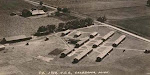
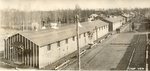
Buffalo Crossing Camp, Eastern Arizona

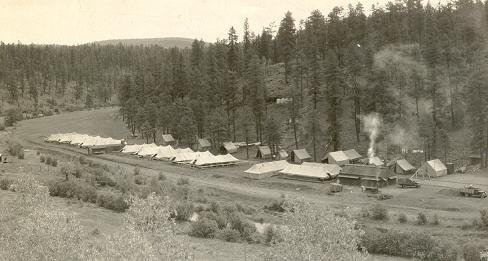
Buffalo Crossing Camp, Eastern Arizona